#52 Always Hungry? | Book Review
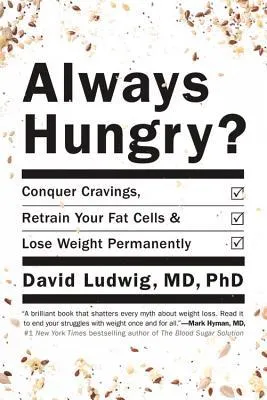 Always Hungry?: Conquer Cravings, Retrain Your Fat Cells, and Lose Weight Permanently by David Ludwig
My rating: 3.5 of 5 stars
What kind of book is this?
This is an expository work; more specifically, popular science with a practical diet program attached. The first four chapters argue why we gain weight and why dieting fails; the rest is the program itself, with a preparation week, three phases, meal plans and recipes.
Rational & Why I read this book
I picked up this book as it was recommended in the book Food Intelligence: The Science of How Food Both Nourishes and Harms Us and because I’m searching for causes and solutions for my struggle with being overweight.
The unity of the book — what is the book about as a whole?
David Ludwig, a physician and researcher at Harvard Medical School, argues that the calorie-balance view of obesity has cause and effect backwards. In his account, sugar and highly processed starches drive up insulin, insulin programs fat cells to hoard calories, the rest of the body runs short of fuel, and the brain answers with hunger and a slower metabolism. Overeating is the consequence of becoming fat, not its cause, and cutting calories makes the body fight back. His remedy is to change what we eat, not how much, in three phases: a two-week boot camp to conquer cravings, a hunger-free phase to retrain the fat cells, and a customized phase to keep the weight off, with advice on sleep, movement and stress. Around that, he tells the stories of the people in his pilot and gives a seven-day preparation countdown, meal plans and recipes. He admits that the program has only been tried in a 16-week pilot with 237 participants and no control group (pp. 13–14).
The book’s structure
The book is divided into a prologue, 9 chapters and an epilogue, followed by three appendices, and spans roughly 400 pages.
- The Big Picture
- The Problem
- The Science
- The Solution
- Prepare to Change Your Life
- Phase 1: Conquer Cravings
- Phase 2: Retrain Your Fat Cells
- Phase 3: Lose Weight Permanently
- Recipes
Epilogue: Ending the Madness
One particular lesson
Hunger is biology, not weak will. When you eat fewer calories, the body burns fewer calories while your hunger rises, which Ludwig calls “a recipe for failure” (p. 36). In studies at Rockefeller University in the 1980s, volunteers who were underfed until they lost 10 to 20 percent of their weight burned far fewer calories than their weight loss alone explains, and they got hungrier (p. 36). In his words: “It’s not a matter of willpower so much as biology and time” (p. 11). So his program changes what we eat, not how much (p. 11).
Judgement & Recommendations - Who should read this?
Everyone struggling to lose weight should read this book, especially if you think fat is worse than carbs and protein.
As far as I can tell, the research on the author’s take is rather thin, promising but thin. So it’s ironic he would condemn other thin studies as not reliable. It is still a 7/10 on my personal rating scale, which I usually give when I can say that it is a “good read, despite minor weaknesses; generally recommended.” I did not yet try his nutritional program but plan to do so. If I have success with it, my rating will go up to 8/10; if I don’t, it might go down to 6/10.
Find my other book reviews at: https://www.dennisnehrenheim.com/read