#51 Wayfinding | Book Review
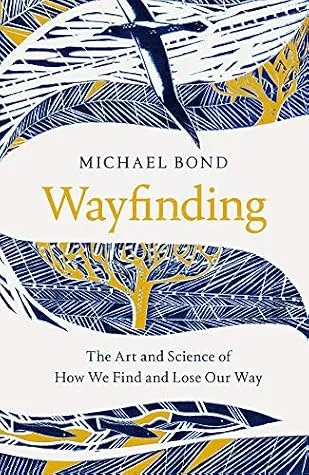 Wayfinding: The Art and Science of How We Find and Lose Our Way by Michael Shaw Bond
My rating: 3.5 of 5 stars
What kind of book is this?
This is an expository work; more specifically, popular science. It is mostly theoretical rather than practical: how we find our way and why we get lost.
Rational & Why I read this book
I am writing my own book on wayfinding through life, so I was interested to learn what physical navigation and wayfinding can teach us.
The unity of the book — what is the book about as a whole?
Michael Bond, a science journalist and former New Scientist editor, explains how we find our way and why we get lost. The core is neuroscience: place cells, grid cells and head-direction cells in and around the hippocampus build a map of where we are, and the same map seems to carry our memories, our imagination and even abstract thinking. Around that, Bond tells the stories of Inuit hunters, Siberian reindeer herders, Polynesian sailors, search-and-rescue teams and Alzheimer’s patients, and he ends with a warning about what GPS costs us.
The book’s structure
The book is divided into an introduction, 10 chapters and an epilogue, and spans roughly 300 pages.
- The First Wayfinders
- Right to Roam
- Maps in the Mind
- Thinking Space
- From A to B and Back Again
- You Go Your Way, I’ll Go Mine
- Natural Navigators
- The Psychology of Lost
- City Sense
- Am I Here?
Epilogue: The End of the Road
Some lessons I take with me
Three lessons stayed with me.
- When you are lost in a real forest, stop. Lost people rarely stay put. Most of them panic. They keep moving, walk in circles, and stop noticing landmarks; of more than 800 search-and-rescue cases in Nova Scotia, only two lost people had stayed where they were (p. 161). My note I took for my own book: mental forests are the same; we fail to navigate them when we are anxious.
- Memory is attached to places. Rooms and doorways cut experience into episodes, which is why the memory-palace method works and why you remember best where you learned (pp. 76–79).
- Let children roam while they can. My son is three, and Bond writes that around the age of four children stop thinking in people nearby and start thinking in places; only then do they become aware of what being lost means, and they begin to fear it (p. 32).
My favorite highlight is on attention (p. 153):
“Attention is at the heart of wayfinding, but it also serves a greater purpose: it connects us to the space around us and tethers us to reality. To know that ‘I am here’ to feel it with all your senses can be immensely reassuring, especially if, like most people, you spend a lot of time distracted by thoughts a long way from the present. Through awareness, wayfinding becomes a kind of meditation, and in nomadic and seafaring cultures, expert navigators are respected not just for their skills, but as teachers or leaders. Their role is to guide people through the wilderness of life, and to orientate them in the mental as well as the physical realm.”
Judgement & Recommendations - Who should read this?
It is an interesting book for almost everyone, but not necessarily one you need to read. In the copy I read, the images were in the wrong places, and the topics are all over the place, with no clear progression. It is still a 7/10 on my personal rating scale which I usually give when I can say that it is a “Good read, despite minor weaknesses; generally recommended”.
Find my other book reviews at: https://www.dennisnehrenheim.com/read